
Laura Ford of Sullivan, LLC

Blog / Automotive Maintenance

What St. Louis Drivers Should Know About Brake Repair Service

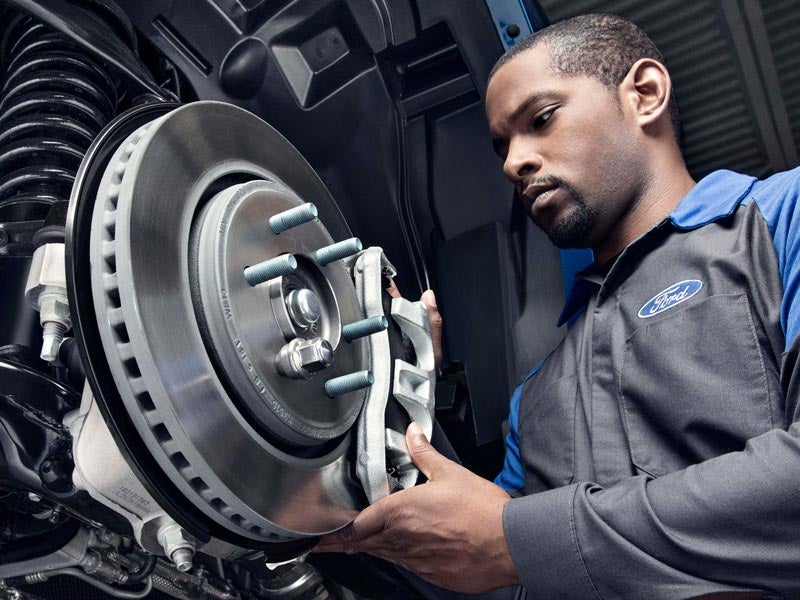
Close-up of a Ford mechanic working on a vehicle's disc brake assembly.

Your brakes are one of the most critical safety systems on your vehicle. No matter if you're driving in highway traffic or stopping at a busy intersection, having brakes in good working order is non-negotiable. If you drive a Ford in St. Louis, MO, staying on top of brake repair service is one of the smartest things you can do for your safety and your vehicle's long-term health. 

Brakes don't fail overnight. They wear gradually and knowing what to watch for can help you catch problems before they become serious. 

Common Signs Your Ford Needs Brake Repair Service 

One of the most recognizable signs that your Ford needs brake repair service is a squealing or grinding noise when you press the brake pedal. That sound often signals worn brake pads that need to be replaced. Ignoring it can lead to damage to your rotors, which means a more involved and costly service repair down the road. 

You should also pay attention to how your brakes feel. A soft or spongy pedal, pulling to one side when braking, or vibration through the steering wheel are all warning signs to take seriously. These symptoms could point to issues with brake fluid, calipers, or rotors that need professional attention. 

How Often Should Brake Service Be Performed 

There isn't a one-size-fits-all answer, but most Ford owners should have their brakes inspected at least once a year or every 12,000 miles. Your driving habits play a big role in how quickly brake components wear. Frequent stop-and-go driving in urban areas can accelerate brake pad wear compared to mostly highway driving. 

Towing or carrying heavy loads also puts extra demand on your brakes. If you use your Ford F-150 or Super Duty for work purposes, more frequent brake inspections are a smart idea. 

What to Expect During a Brake Repair Service Visit 

When you bring your Ford in for a brake repair service, a trained technician will inspect the full braking system. That includes measuring brake pad thickness, checking rotor condition, inspecting brake lines and fluid levels, and evaluating caliper performance. Based on those findings, they'll recommend what needs immediate attention versus what can be monitored over time. 

Genuine Ford parts are designed to work specifically with your vehicle's system, which means better performance and a more predictable lifespan than generic alternatives.  

Keeping Up With Service Repair for Long-Term Safety 

Staying current with vehicle service isn't just about passing an inspection. It's about protecting yourself, your passengers, and everyone else on the road. Well-maintained brakes also helps preserve other components of your vehicle, like tires and suspension, by ensuring even and controlled stopping power. 

Ford's service offerings are designed to make this process convenient. Options like Ford Mobile Service and Ford Pickup and Delivery (where available) mean you may not even need to rearrange your schedule to get the attention your vehicle needs. 

Schedule Your Brake Repair Service Today 

If it's been a while since your last brake inspection, or if you've noticed any of the warning signs mentioned above, don't wait. Brake repair service is one of those things where acting early almost always saves you time, money, and stress. Visit Laura Ford of Sullivan online to schedule your appointment and keep your Ford running safely for the miles ahead. 
Posted in:

Related Posts

5 Signs You Should Get Your Brakes Checked

Your vehicle's brakes are one of its most critical safety features. Ignoring potential brake issues can lead to costly repairs or, worse, unsafe driving conditions. Recognizing the signs of brake problems early can save you time, money, and stress. If you're in St. Louis, MO, and wondering whether it's time for a brake inspection, here are five key indicators to watch for. more Unusual Noises While Braking One of the most common signs you should get your brakes checked is hearing unusual noises when you press the brake pedal. Squealing or screeching sounds often indicate worn brake pads, while grinding noises could mean the pads are completely worn down, causing metal-to-metal contact. These sounds are not normal and should be addressed immediately to prevent further damage to your braking system. In addition to noise, vibrations or pulsations in the brake pedal can also signal issues with your rotors or uneven wear on your brake pads. Drivers in St. Louis, MO, should not ignore these symptoms, as they can compromise braking performance and safety. Reduced Responsiveness or Spongy Brake Pedal If your brakes feel less responsive or the pedal feels spongy when pressed, it’s a clear sign that something is wrong. This could indicate air in the brake lines, a brake fluid leak, or worn-out brake components. A spongy pedal can significantly reduce your ability to stop quickly, which is especially concerning in high-traffic areas like St. Louis. Regular maintenance and timely inspections can help prevent these issues from escalating. Remember, your brakes are designed to respond instantly to delay or softness in the pedal is a red flag that needs immediate attention. Warning Light on Your Dashboard Modern vehicles are equipped with advanced technology to alert you when something is wrong. If your brake warning light illuminates on the dashboard, it’s one of the clearest signs you should get your brakes checked. This light could indicate anything from low brake fluid levels to a more serious issue with the brake system. Ignoring this warning can lead to more significant problems down the road. If you're unsure what the light means, consult your owner’s manual or visit a trusted service center like Laura Ford Sullivan for a professional diagnosis. Pulling to One Side While Braking Does your vehicle pull to one side when you apply the brakes? This could be caused by uneven brake pad wear, a stuck caliper, or issues with the brake fluid distribution. Pulling not only makes driving uncomfortable but also poses a safety risk, especially in emergency braking situations. Drivers in St. Louis, MO, who experience this issue should schedule a brake inspection as soon as possible. Addressing the problem early can help restore balance and ensure your vehicle stops safely and effectively. Burning Smell After Braking A burning smell coming from your wheels after braking is another sign you should get your brakes checked immediately. This odor often indicates overheated brakes or stuck calipers, both of which can compromise your vehicle’s stopping power. Overheating can also damage other components of the braking system if left unaddressed. If you notice this smell while driving around St. Louis, MO, pull over safely and allow your brakes to cool down before continuing. Then, schedule an inspection to identify and resolve the underlying issue. Visit Laura Ford of Sullivan in Sullivan, MO Don’t wait until it’s too late—your safety depends on properly functioning brakes. If you’ve noticed any of these five signs you should get your brakes checked, visit Laura Ford Sullivan today for expert service and peace of mind. Our team is here to help drivers throughout St. Louis, MO, stay safe on the road with professional brake inspections and maintenance services.

Red Ford Explorer ST SUV parked on a paved road flanked by autumn foliage.

Ford Explorer Hybrid Specs: What You Need to Know About Performance

What Makes the Ford Explorer Worth Considering Finding an SUV that perfectly balances power and everyday practicality is a top priority for many drivers. You may be searching for the 2026 Ford Explorer Hybrid to maximize fuel efficiency. Currently, Ford reserves the 2026 Explorer Hybrid exclusively for law enforcement as the Police Interceptor Utility. Fortunately, you can still experience incredible performance with the new gas-powered 2026 models or shop for a pre-owned hybrid by contacting the team at Laura Ford of Sullivan in Sullivan, MO. We are ready to help you find the right fit for your daily commute. more Understanding the Explorer Powertrain Options The legendary hybrid system pairs a 3.3-L V6 engine with an electric motor to produce a combined 318 horsepower. This setup utilizes a 10-speed automatic transmission for responsive acceleration. While this hybrid configuration is now dedicated to police fleets, the civilian 2026 Ford Explorer offers equally impressive gas engines. The standard 2.3-L EcoBoost delivers 300 horsepower. Drivers seeking maximum thrills can opt for the 3.0-L EcoBoost V6, which generates 400 horsepower. Both civilian powertrains provide fantastic power for highway merging and city driving. All-Wheel Drive and Real-World Capability The Ford Explorer features a standard rear-wheel-drive platform, with intelligent four-wheel drive available. This four-wheel-drive configuration adds necessary traction on uneven terrain and in unpredictable weather. Towing capability reaches up to 5,000 pounds on properly equipped models. This impressive utility makes the Explorer a competitive choice for hauling equipment around the region. Ride, Handling, and Driver Confidence The Explorer delivers a remarkably composed and comfortable ride. The independent front and rear suspension absorbs road imperfections with ease. Advanced driver-assist technology, like Ford Co-Pilot360©, works quietly in the background to increase your confidence behind the wheel. The powertrain management smoothly handles gear transitions to optimize efficiency based on your specific driving style. Technology and Interior Features Inside the spacious cabin, you will find a massive 13.2" touchscreen infotainment display. The system includes wireless Apple CarPlay© and Android Auto© compatibility to keep you connected. Drivers can also enjoy the available BlueCruise© hands-free highway driving technology and a Wi-Fi© hotspot. Cargo space is generous, and the three-row seating layout gives families absolute flexibility. Discover Your Next SUV at Our Dealership The Ford Explorer lineup delivers exceptional utility, modern technology, and thrilling power. You can enjoy robust towing capacity and advanced interior features that make every trip enjoyable. Reach out to Laura Ford of Sullivan in Sullivan, MO to learn more about the latest models, explore pre-owned hybrid options, and schedule your test drive today.

Dark gray Ford F-150 Raptor R pickup truck parked on a sandy dune.

Ford F-150 Brake Replacement: How to Know When It's Time

Your Ford F-150 is built to handle heavy loads, long hauls, the busy streets of St. Louis, MO, and everything in between—which means your brakes work hard every single day. So recognizing when your Ford F-150 needs a brake replacement is one of the most important things you can do to protect yourself, your passengers, and your truck. When life is busy, it’s hard to fit in truck maintenance, but ignoring worn brakes won’t just lead to more expensive repairs down the road—it puts you, your passengers, your cargo, and others on the road at risk. more Signs You Need New Brakes on Your F-150 One of the clearest signs you need new brakes is that horrible, high-pitched squealing when you step on the brake pedal. That noise typically comes from a small wear indicator built into the brake pad, designed to alert you before the pads wear down completely. If you hear it consistently, it's time to have your brakes inspected. Another telling sign you need new brakes is a grinding or growling noise when stopping. That usually means the brake pads have worn through entirely—now, the metal backing is making direct contact with the rotor. At this point, both the pads and rotors may need to be replaced, making repairs more involved than a simple pad swap. You might also notice your F-150 pulling to one side when braking, a soft or spongy brake pedal, or vibrations through the steering wheel. These are all signals that something in your braking system needs attention and shouldn't be put off. Understanding Rotor Wear on the F-150 Rotors are the large metal discs that your brake pads clamp down on to slow the truck. Over time, they develop grooves, scoring, and uneven surfaces from regular use. Rotor wear becomes especially pronounced when brake pads are left on too long, which is why catching worn pads early is so important. During a Ford F-150 brake replacement, a technician will measure rotor thickness and inspect the surface for damage. If the rotors have worn below minimum thickness or show deep grooves, resurfacing or full replacement is typically recommended. Driving on damaged rotors reduces braking performance and can cause that telltale vibration you may feel through the pedal or steering wheel. Rotors on a heavy-use truck like the F-150 may wear faster if the vehicle is regularly used for towing or hauling. Checking your brakes at every oil change is a straightforward habit that helps you stay ahead of rotor wear before it becomes a bigger issue. Ford Mobile Service and Brake Inspections One of the benefits of owning a Ford is access to convenient ownership tools. Ford Mobile Service allows certified technicians to come to your home or workplace to handle many routine services. For more involved repairs like Ford F-150 brake replacement, you can also take advantage of Ford Pickup and Delivery, where your vehicle is picked up, serviced at the dealership, and returned to you. These options make it easier than ever for drivers in St. Louis, MO to keep their trucks in safe, road-ready condition without disrupting their schedules. Keep Your F-150 Stopping as Well as It Moves Your F-150 is engineered for capability—but capability only matters when you can stop safely. Whether you're hearing grinding noises, have to push harder on the brake pedal, or simply haven't had your brakes checked in a while, don't wait. Proactive Ford F-150 brake replacement protects your truck and gives you confidence behind the wheel. Reach out to Laura Ford Sullivan in St. Louis, MO to schedule a brake inspection today.